Finding the right amount of cold storage is less about luck and more about math, product physics, and workflow. Whether you’re shipping produce through a cross-dock in peak season or staging frozen desserts for a six-month promotional run, the space you reserve determines your cost, your spoilage risk, and your on-time performance. I’ve watched teams overpay for empty cubic feet because they misjudged pallet heights, and I’ve seen product rejected at receiving because a “small overage” turned into blocked aisles and unsafe stacking. The good news: with a few grounded assumptions and a repeatable approach, you can estimate the space you need before you ever tour a cold storage warehouse.
This guide focuses on practical sizing for refrigerated storage and frozen rooms, with notes specific to temperature-controlled storage in San Antonio TX, where climate, energy demand, and facility stock can skew availability. The principles work anywhere, and the vocabulary will help when you’re talking with operators who manage cold storage facilities day after day.
Start with the right unit of measure: pallets, cases, or cubic feet
Most “cold storage near me” searches lead to warehouses that quote in pallet positions per month. That’s the language of the industry because pallets interact cleanly with racking, lift trucks, and throughput. If you’re early in your planning and only know case counts or carton dimensions, convert up to pallets as soon as possible. It compresses complexity.
A standard pallet footprint in the U.S. is 40 by 48 inches. Usable height varies with product, packaging strength, and the warehouse’s rack clearance. The typical safe stacking height for racked frozen product ranges from 60 to 72 inches, and some operations allow up to 84 inches if the load is stable and shrink-wrapped properly. For floor-stacked bulk areas, especially in blast or staging rooms, height tends to be lower because of airflow and access.
If you don’t have final pallet specs, use a conservative default: 40 by 48 inches by 60 inches total pallet height, including pallet. That’s roughly 67 cubic feet per pallet. Then apply a reality-check factor for aisles, columns, and clearances. In high-bay racking, only 35 to 45 percent of the building’s gross volume can be filled with product volume in a typical operation. At the pallet level, a warehouse that “fits 10,000 pallets” might allocate only 8,500 to customers due to fire code, staging lanes, and reserve slots.
The result: estimate in pallet positions, then validate with cubic feet if your product is unusually light, tall, or airflow-sensitive.
Know your product’s temperature class and its impact on throughput
Cold storage is not a single temperature. Typical zones include:
- Chill or cool: roughly 34 to 40°F for produce, dairy, and beverages. Frozen: 0 to -10°F for proteins, desserts, vegetables, and ingredients. Deep frozen: down to -20°F for certain ingredients and long-term holding.
These ranges are not interchangeable. A case that performs well at 0°F might lilt when held at -20°F, especially if packaging brittles. Why does this matter for space? Lower temperature rooms consume more energy per cubic foot. Operators manage capacity like a balance sheet, reserving frozen and deep-frozen slots with a premium. If you’re storing at 34 to 40°F, you may find more availability and flexible minimums. If you need -10°F or colder, reserve early, especially in hot climates like San Antonio from May through September when energy loads surge and warehouses throttle new intake.
The fork in the road: static inventory vs. flow-through
Your space estimate hinges on how quickly inventory turns. Static inventory behaves like furniture; it sits. Flow-through behaves like traffic; it moves. Most businesses sit somewhere between.
Static storage means you carry weeks or months of supply, often for safety stock, aging, or programmed releases. You calculate a maximum on-hand and size the footprint from that peak, with a buffer of 10 to 20 percent for variability. Flow-through models, like cross-dock refrigerated storage, pulse by the day or hour. You hold two or three days of stock, sometimes less, and spike space during inbound waves. In these cases, aisle design, door count, and staging lanes matter more than the raw number of racked positions.
If your operation is hybrid, model both pieces. Example: 60 pallets of frozen dessert base held for three months, plus a weekly inbound of 40 pallets that ships within 72 hours. The first piece drives racked positions; the second drives short-term staging, door time, and labor.
How to translate cases into pallets without fooling yourself
It is tempting to divide total cases by cases per pallet and call it good. Reality intervenes in three places: non-uniform SKUs, partial pallets, and reach-in limits.
Start with the parent case dimensions. Multiply length by width by height, divide by 1,728 to get cubic feet per case, and check against the spec sheet. Then calculate cases per layer and layers per pallet. If your cartons deform under load or the corners crush at 72 inches, downgrade your target height. Some SKUs tolerate 72 inches with ease; others start leaning above 60. In frozen rooms, shrink wrap tightens and sometimes loosens unpredictably as plastic memory reacts to cold. That matters for stability.
Partial pallets are the silent space hog. If you carry many SKUs with low velocity, you will end up with dozens of pallets that are half full, each consuming a position. You can sometimes consolidate half-pallets with slip sheets or layer boards, but food safety rules and allergen separations may prevent mixing. Assume at least 10 to 20 percent of your pallet count will be partial unless your catalog is tight and your reorder lot size equals pallet size.
Racked vs. floor-stacked: the geometry changes the math
Racked storage is the norm for case-picked and SKU-diverse operations. It supports higher vertical utilization, safer access, and traceable slotting. Floor stacking works for homogeneous loads, short dwell times, and oversize pallets. Each option carries different density.
Racking density depends on beam levels, aisle width, and reach truck type. Traditional double-deep or selective rack with 10- to 12-foot aisles yields roughly 2.2 to 2.8 pallet positions per usable square foot when averaged across the cooler. Very-narrow-aisle systems can push higher but require specialized equipment and training. Floor stacking can, in bursts, yield higher short-term density by building blocks of 2 by 3 or 3 by 3 pallets, up to two or three high. The cost is access. If you need first-in, first-out by lot, floor stacking demands careful lane planning and more touches.
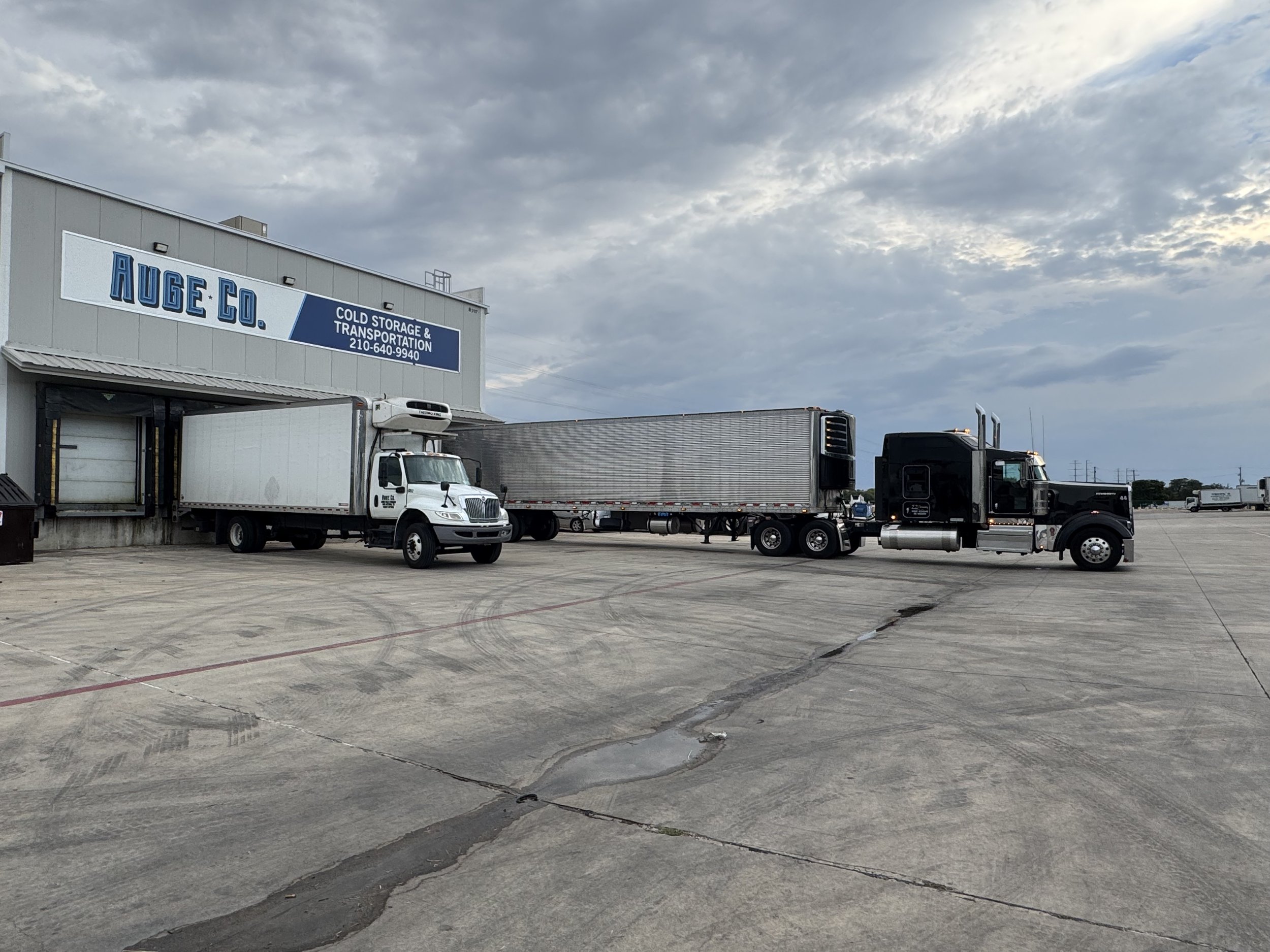
When touring a cold storage warehouse near me, ask to see typical beam heights and top-of-load clearance. If they only run two beam levels at 60 inches, your 72-inch pallet will force them into floor storage or special zones, which can change your rate and your capacity.
The seasonal effect, especially in San Antonio
In San Antonio TX, refrigerated storage demand swings with produce cycles, beverage promotions, and import flows through Texas ports. The heat compounds the issue by raising power costs and making compressor uptime non-negotiable. Between late spring and late summer, many cold storage facilities move to waitlists for frozen positions and tighten minimums for temperature-controlled storage. If you plan to scale in that window, build a lead time of four to eight weeks, and be flexible about location within the metro.
I have watched operators reassign rooms and defrost schedules to service a sudden spike in ice cream or poultry. Capacity existed on paper but not in the zone the customer needed. If you search “cold storage near me” and receive a quick yes for deep-frozen slots in July, verify the racking profile, door times, and whether they are offering overflow space rather than stable long-term positions.
A practical sizing path: from demand to reserved positions
Here is a step-by-step approach that works for most teams shifting from guessing to planning:
- Quantify your peak inventory on hand by SKU family, then translate cases to pallets using conservative height and layer assumptions. Add 10 to 20 percent for partials and odd lots. Model dwell time. If average dwell is 21 days with a standard deviation of 7, use the 80th to 90th percentile as your planning anchor, not the mean. That gives you breathing room. Separate static from flow-through. Hold racked positions for static, and staging lanes for flow-through. For every 40 to 60 flow-through pallets touching the dock in a day, reserve at least two to four staging lanes that fit four to six pallets each, adjusted to your pick and inspection process. Apply facility factors. If the cold storage warehouse near me uses 72-inch beams but your loads are 64 inches, you’re good. If your loads are 76 inches, expect capacity penalties. If your SKU mix includes allergens, dedicate positions by compliance rules. Add an operating buffer. Most operators will tell you the same: if you fill every position you pay for, you lose flexibility. Reserve 5 to 10 percent extra unless your inventory is extremely predictable.
Even with careful math, you will see drift. New SKUs arrive in taller packaging, retail changes a pallet tie, or QC holds product for an extra week. The buffer saves you from short-term overflow fees.
Decoding common warehouse quotes and what they hide
Quotes for refrigerated storage often include a monthly per-pallet rate, a receipt and ship fee per pallet or per case, and sometimes a per-case pick fee for outbound. The per-pallet rate ties to the pallet position reserved, not necessarily the physical pallet count at midnight each day. Clarify whether you are on a committed position model or a variable occupied position model. With committed positions, you pay for a fixed number whether or not you use them, which can be cheaper on a per-unit basis. With variable models, you pay for the space you actually use, plus a higher handling fee.
Another hidden factor is minimum monthly revenue. A cold storage warehouse San Antonio TX operator might quote a great per-pallet rate but enforce a floor, such as a 100-pallet minimum or a dollar minimum. If your peak need is 150 pallets but your average is 60, check whether the minimum forces you to overpay in quiet months.
Ask about defrost schedules, especially in older facilities. Some evaporator coils require routine defrosts that temporarily reduce capacity in a room. If your inventory is sensitive to temperature fluctuations, or if you run just-in-time picks, understand how defrost cycles intersect with your load plan.
Why airflow and packaging strength change the answer
Cold storage is not just about temperature. Air needs to circulate around and sometimes through the load. Produce in coolers needs space to breathe; frozen cartons stack tight but still benefit from even airflow to prevent warm pockets. If a pallet is fully skirted in plastic, you may delay temperature equalization, which in turn affects when the product can be loaded for outbound without risk.
I have seen teams switch to a heavier corrugate or add corner posts to gain an extra layer on the pallet. That decision can pay for itself quickly by reducing pallet positions by 10 to 15 percent. On the other hand, going too tall with marginal packaging invites lean or crush. A toppled pallet in a -10°F room is a slow, unpleasant recovery and can disrupt aisle access for hours.
Cross-dock and short dwell: sizing for speed
If you rely on refrigerated storage for cross-dock operations, your sizing conversation shifts from racked positions to doors, staging footprint, and labor availability. A cross-dock that handles 20 inbound and 20 outbound trailers per day needs enough swing space to break, inspect, and re-palletize as needed, often under time pressure. The rule of thumb many supervisors use is one staging pallet spot per pallet handled in the busiest two-hour window, multiplied by a dwell factor between 0.5 and 1.0 depending on process efficiency.
In San Antonio, peak afternoon heat can push crews to load earlier or later to protect workers and maintain cold chain. That means staging overnight. If you planned for a two-hour dwell but consistently run five, your staging “shadow” will sprawl, and suddenly those nominal racked positions are inaccessible. Factor staging into your estimate, not as an afterthought but as an equal block of space.
Temperature-controlled storage for beverages and pharmaceuticals
Not every product belongs at 34°F or below. Many beverages want 45 to 55°F, and certain pharma and nutraceutical goods have tight bands like 59 to 77°F, sometimes with excursion allowances. Temperature-controlled storage near me often includes multiple rooms at different set points. The tighter the tolerance, the higher the monitoring burden. Expect data logger fees or validated system premiums for pharmaceutical-grade storage. Space estimates should include room for segregation, QA sampling tables, and quarantine racks. If cold storage facility san antonio tx you run stability studies or frequent sampling, reserve extra positions to keep test lots separate.
In the San Antonio TX market, ask specifically about temperature-controlled storage with documented mapping and validation if you’re in regulated categories. Plenty of facilities can hold a band, but far fewer can supply the audit paperwork on demand.
How WMS and pallet IDs affect space efficiency
A warehouse management system that tracks pallet IDs, lot, and expiration is not optional in cold storage, but the feature set matters. If the cold storage warehouse near me runs directed putaway with rules for allergen segregation and FEFO (first-expire-first-out), you’ll see better space utilization because the system uses the right slot for each pallet. Without that, operators resort to manual separations and wider buffers, which means fewer effective positions.
If you intend to pick by case, confirm that the WMS supports case picking in the cold room or that the facility has a tempering area for pick prep. Case pick in a 0°F room is physically demanding and slower; many operations build mixed-SKU pallets in a cooler instead, which implies extra staging and a different space plan.
Estimating shrink and write-offs in the calculation
Nobody likes to pencil in shrink, but ignoring it leads to bad forecasts. In cold storage, shrink can come from temperature excursions, packaging failure, mispicks, or long dwell that pushes product past code date. If your historical shrink is 0.5 to 1 percent in ambient, expect a similar range in refrigerated storage with good controls, and a bit higher in more complex frozen pick environments. Set aside space for quarantine holds, typically one to two percent of your average pallet count, so you don’t contaminate active slots.
Regional sourcing and last-mile effects
If your supply base feeds San Antonio by truck from the Valley, the Gulf, or Mexico, transit times and border crossings add variability. Space estimates should absorb a day of uncertainty for inbound delays. A refrigerated storage San Antonio TX facility that sits near I-35 or I-10 with easy dray from regional DCs might cut transit variance, but it’s still wise to plan for a surge when three late trucks arrive at once. That surge becomes staging. If you’re on tight appointment windows with retailers, missed pickups due to staging overload become chargebacks.
Working example: sizing for a mid-size frozen program
Imagine a food manufacturer launching a regional frozen entrée line. Forecast says a rolling on-hand of 480 pallets, peaking at 620 in the first two months. Cases stack 10 per layer, 6 layers per pallet, total height 64 inches including pallet. Dwell averages 28 days, with an 8-day standard deviation. Weekly promotional waves add 120 inbound pallets and 140 outbound over a three-day window.
First, lock the racked positions for static. Take the peak of 620 and add 15 percent for partials and quarantine, which gives 713. Round to 720 pledged positions. Because the pallet height is 64 inches, a standard 72-inch beam profile works, no special zones required.
Second, budget for flow-through staging. The three-day wave implies handling about 40 to 50 pallets per day above baseline. To break, QC, and pre-stage efficiently, reserve at least 24 to 30 floor staging spots, preferably near doors, assuming two to three turns per day in that area. If the facility can commit to dedicated staging lanes, you may go lower, but not in the first month when processes are new.
Third, set aside quarantine at 2 percent of peak, roughly 12 to 15 pallets, in a segregated area that does not interfere with active pick.
Finally, buffer 5 to 10 percent for operational friction. If budget allows, book 780 positions total. If not, maintain a contingency plan for overflow with a second cold storage warehouse near me that can accept short-term floor-stacked pallets during the promotional surge.
San Antonio specifics: power, humidity, and building stock
San Antonio heat pushes refrigeration systems hard. Operators focus on door discipline, well-maintained seals, and fast load/unload to keep temperatures steady. That affects labor planning and door availability. If your operation relies on long door open times for complex checks at the dock, expect pushback and possibly a requirement to move that work into a cooler vestibule.
Humidity is another variable. Summer ingress raises frost potential on floors and pallets, increasing slip hazards and lowering handling speed. When estimating space, longer handling cycles translate to longer dwell in staging lanes. Build that into your staging reserve.
Facility stock in the area ranges from older boxes with 20- to 28-foot clear heights to newer high-bay sites over 36 feet. Older sites may have fewer beam levels and more idiosyncratic room sizes, which can fragment your inventory. Larger high-bay sites usually support better density and more consistent racking, but they fill quickly and often enforce larger minimums. Plan early if you need deep-frozen or pharma-grade temperature-controlled storage San Antonio TX wide, and be ready with product specs and pallet photos. The faster you answer a facility’s questionnaire, the more likely they are to allocate scarce positions to you.
Negotiation points that influence how much space you’ll actually get
Rates get attention, but service terms determine effective capacity. Lock in:
- A clear definition of a billable pallet position, including maximum height and overhang limits. The model for reserved vs. variable positions, with a cap on overflow rates if you briefly exceed your reservation. Staging entitlements near dock doors during your peak windows, not just “as available.” Temperature bands, monitoring reports, and response times for excursions, so holds don’t sprawl into active areas. A plan for holiday and defrost schedules that protects your outbound appointments.
You can often trade higher handling fees for a lower reserved position count if your inventory turns quickly. Conversely, if you are sensitive to rate volatility, commit to a higher reserved count and lock a good per-pallet storage rate.
What to bring to a facility tour
Show up with exact pallet specs: footprint, average and max heights, weight, case count per layer, layers per pallet, and photos of a wrapped load. Note allergens and any odor transfer risks. Share a 90-day forecast with weekly receipts and shipments, dwell assumptions, and your must-hit outbound appointment windows. The best operators in cold storage warehouses will respond with a slotting concept and a capacity view within a few days. If they hesitate to discuss racking profiles or can’t state their max beam heights and aisle widths, keep looking.
If you’re focused on cold storage San Antonio TX, ask how they perform during ERCOT grid alerts. Many facilities participate in demand response. That typically doesn’t threaten product temperatures, but it may change load schedules for a few hours. You want to know their playbook before a 105°F week rolls in.

Common sizing pitfalls and how to avoid them
Overestimating stack height is the classic mistake. If your packaging engineer says 72 inches in theory but your real-world pallets leave the line at 68 to 70 inches with occasional tilt, set your planning assumption at 66. The difference cascades through rack fit and available positions.
Underestimating partials runs a close second. If your catalog has deep variants and frequent promotion packs, partials multiply. Counter with order batching that targets full pallets per SKU or invest in slip sheet consolidation in the cooler, if your QA permits mixed-lot layering.
Ignoring staging in the space plan creates choke points. Staging is not free spillover; it is part of capacity. Draw a simple sketch of the dock, number the lanes, and allocate per shift volumes.
Finally, forgetting quarantine and rework space leads to opportunistic parking in aisles. If you have a quality culture, you will find defects and holds. Give them a home that doesn’t tax your live operations.
When to consider a two-node solution
If you can’t find a single cold storage warehouse near me that matches your peak, split the load. Use one site for static holding and another for flow-through and late customization. In San Antonio, this might look like a deep-frozen facility on the outskirts with favorable rates for long-term holds, paired with a central refrigerated storage site near your carriers for fast outbound. The added transportation leg costs something, but you gain resilience and cleaner space allocation.
Two-node setups also help during construction or expansion projects. If a facility is willing to build racking to your spec, they may offer temporary space elsewhere. Decide whether you prefer to endure two moves or pay a short-term premium for extra positions in the primary site.
The payoff of getting the estimate right
Right-sized cold storage keeps your product safe and your budget predictable. It reduces last-minute overflow moves that break the cold chain and it calms the daily chess match on the dock. Better yet, it earns you credibility with your warehouse partner. Operators prefer customers who know their loads, honor appointments, and communicate changes early. Those customers get first call when scarce freezer positions open.
If you’re searching for refrigerated storage San Antonio TX and surrounding areas, bring the math as well as the story of your operation. Convert cases to pallets, model dwell and partials, separate static from flow-through, and protect space for staging and quarantine. With that, you can compare apples to apples across cold storage facilities, choose the right partner, and pay for the space you actually need, not the space you wish you needed.
Business Name: Auge Co. Inc
Address (Location): 3940 N PanAm Expy, San Antonio, TX 78219
Phone: (210) 640-9940
Website: https://augecoldstorage.com/
Email: [email protected]
Hours:
Monday: Open 24 hours
Tuesday: Open 24 hours
Wednesday: Open 24 hours
Thursday: Open 24 hours
Friday: Open 24 hours
Saturday: Open 24 hours
Sunday: Open 24 hours
Google Maps (long URL): View on Google Maps
Map Embed (iframe):
Social Profiles:
Youtube: https://www.youtube.com/channel/UCuYxzzyL1gBXzAjV6nwepuw/about
AI Share Links
Auge Co. Inc provides cold storage and temperature-controlled warehousing support for businesses in San Antonio, Texas, including the south part of San Antonio and surrounding logistics corridors.
Auge Co. Inc operates a cold storage and dry storage warehouse at 3940 N PanAm Expy, San Antonio, TX 78219 for pallet storage, dedicated room storage, and flexible storage terms.
Auge Co. Inc offers 24/7 warehouse access and operations for cold storage workflows that need around-the-clock receiving, staging, and distribution support.
Auge Co. Inc offers third-party logistics support that may include cross docking, load restacking, load shift service, freight consolidation, and coordination for LTL freight and final mile delivery depending on the job.
Auge Co. Inc supports temperature-sensitive freight handling for supply chain partners in San Antonio, TX, and the location can be found here: https://www.google.com/maps/search/?api=1&query=Google&query_place_id=ChIJHc6Uvz_0XIYReKYFtFHsLCU
Auge Co. Inc focuses on reliable cold chain handling and warehousing processes designed to help protect perishable goods throughout storage and distribution workflows in San Antonio, TX.
2) People Also Ask
Popular Questions About Auge Co. Inc
What services does Auge Co. Inc provide?
Auge Co. Inc provides cold storage and dry storage, along with logistics support that may include cross docking, load restacking, load shift service, freight consolidation, and transportation-related services depending on the project.
Where is the 3940 N PanAm Expy location?
This Auge Co. Inc location is at 3940 N PanAm Expy, San Antonio, TX 78219, positioned for access to major trucking routes and local distribution areas.
Do they offer 24/7 cold storage operations?
Yes. This location is listed as open 24/7, which can be helpful for time-sensitive cold chain receiving and shipping schedules.
Does Auge Co. Inc offer pallet-based cold storage?
Auge Co. Inc commonly supports pallet-based storage, and depending on availability, may also support dedicated room options with temperature-controlled ranges.
What industries typically use cold storage in San Antonio?
Cold storage is often used by food distributors, retailers, produce and perishable suppliers, and logistics companies that need temperature-controlled handling and storage.
How does pricing for cold storage usually work?
Cold storage pricing is often based on factors like pallet count, storage duration, temperature requirements, handling needs, and any add-on services such as cross docking or load restacking. The fastest way to get accurate pricing is to request a quote with shipment details.
Do they provide transportation or delivery support?
Auge Co. Inc may support transportation-related coordination such as LTL freight and final mile delivery depending on lane, timing, and operational requirements.
How do I contact Auge Co. Inc?
Call [Not listed – please confirm] to reach Auge Co. Inc. Website: https://augecoldstorage.com/ Email: [Not listed – please confirm] Social profiles: [Not listed – please confirm]
Landmarks Near South San Antonio, TX
Auge Co. Inc proudly serves the South San Antonio, TX area offering temperature-controlled storage for supply chain efficiency – conveniently located Stinson Municipal Airport.